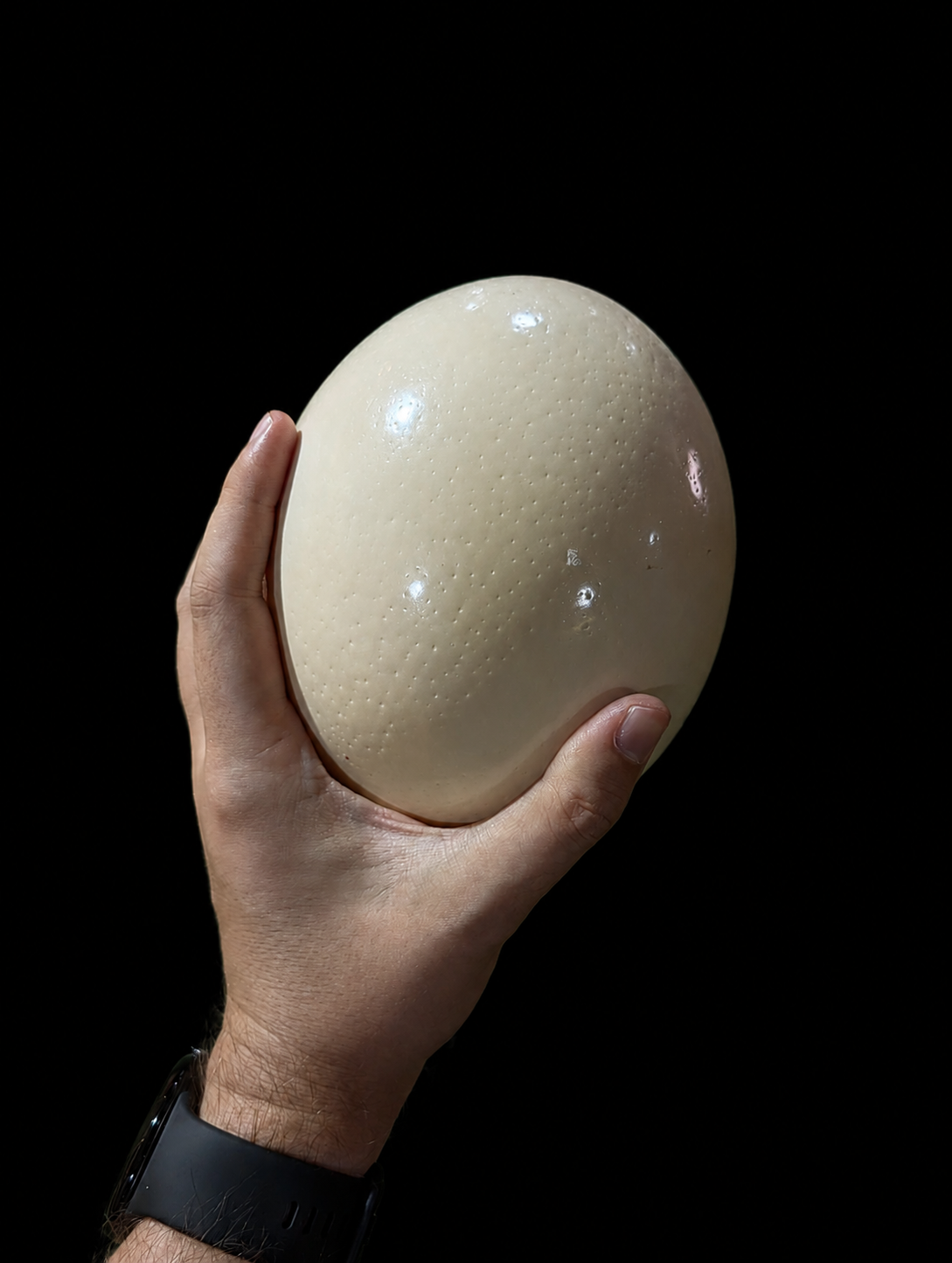
The ostrich egg is one of nature’s most extraordinary creations. Laid by the world’s largest living bird, the ostrich (Struthio camelus), it holds the title of the largest egg produced by any living animal. Despite its enormous size, the egg is perfectly adapted to protect and nourish a developing chick in the challenging environments of the African savanna.
An ostrich egg typically measures around 15 centimeters (6 inches) in length and can weigh approximately 1.4 kilograms. Its shell is exceptionally strong, around ten times thicker than that of a chicken egg, and a single ostrich egg contains the equivalent of about 24 chicken eggs.
Female ostriches are prolific layers, producing between 40 and 100 eggs each year. In the wild, several females may lay their eggs in a communal nest, which is then carefully guarded by the dominant breeding pair. Incubation is a shared responsibility, with the female sitting on the eggs during the day while the male takes over at night. This teamwork helps protect the eggs from predators and harsh environmental conditions.
After an incubation period of approximately 36 to 45 days, the chicks begin to hatch. Even at birth, ostrich chicks are remarkably large and well-developed, ready to follow their parents and explore the world shortly after emerging from the egg.
The ostrich egg is not only a symbol of new life but also a remarkable example of adaptation, demonstrating how animals have evolved unique reproductive strategies to ensure the survival of future generations.